The European Space Agency’s JUICE spacecraft was not supposed to be looking for comets. Launched in 2023, its primary mission is Jupiter’s icy moons. But in July 2025, a tiny blip appeared in telescope surveys. It was moving too fast, on a path too steep, to be a local rock. That blip was Comet 3I/ATLAS, and it had just completed a journey that began billions of years ago, somewhere near the center of the Milky Way.
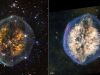
JUICE was about 66 million kilometers away when it got the call. The spacecraft turned its instruments on the intruder. Over 120 images, captured at multiple wavelengths, showed something familiar: a glowing coma and a sweeping tail of gas and dust. The comet looked like any other. But its origin is what made history. This is only the third interstellar object ever photographed inside our solar system.
The data reached Earth in early 2026. Analysis is still underway. The numbers are stark. The comet is tearing along at roughly 137,000 miles per hour. That speed, combined with its trajectory, points back to the galactic center. It spent billions of years in the dark between stars before swinging through our neighborhood.
For planetary scientists, this is a locked vault that just cracked open. Comet 3I/ATLAS did not form around our Sun. It formed around another star, in a distant part of the galaxy. That means the ice and dust in its tail are not local materials. They are samples from another planetary system, delivered to our doorstep for free. Studying them offers a direct look at how comets and planets form elsewhere. It is a rare chance to compare the stuff of other worlds with the stuff of our own.
The JUICE spacecraft was not designed for this. It is a Jovian orbiter, built to study Europa and Ganymede. But it happened to be in the right place with the right instruments. The comet was photographed from a distance that allowed the whole coma and tail to fit in the frame. Closer would have been better, but 66 million kilometers is still close enough to get high-quality spectral data. The spacecraft can see what elements and molecules are outgassing. It can measure the dust particle sizes. It can do everything a dedicated comet mission would do, except for one thing: it cannot get any closer. The comet is already gone, heading back out into the void.
That is the frustrating part of interstellar visitors. They come, they are seen, they leave. ‘Oumuamua in 2017 was a blurry dot. Comet 2I/Borisov in 2019 was better, but still a fleeting target. 3I/ATLAS is the best-observed so far, thanks to JUICE’s timing. But it is still a one-shot deal. The data that exists is all there will ever be.
The implications go beyond astronomy. If comets carry organic material between stars, and if they can seed planets with the building blocks of life, then every interstellar visitor is a messenger. Comet 3I/ATLAS may hold clues about the potential for life beyond Earth, not in the abstract, but in the actual chemistry of another star’s leftovers. That is a heavy load for a ball of ice and dust. But the scientists analyzing the JUICE data are treating it with the gravity it deserves.
The European Space Agency has not released final results yet. The work is ongoing. Every new spectrum from the JUICE archive could rewrite a chapter of planetary science. For now, the comet is a ghost, already far beyond the orbit of Neptune, carrying its secrets back toward the galactic center it came from. Humanity got 120 images and a few months of data. That will have to be enough.